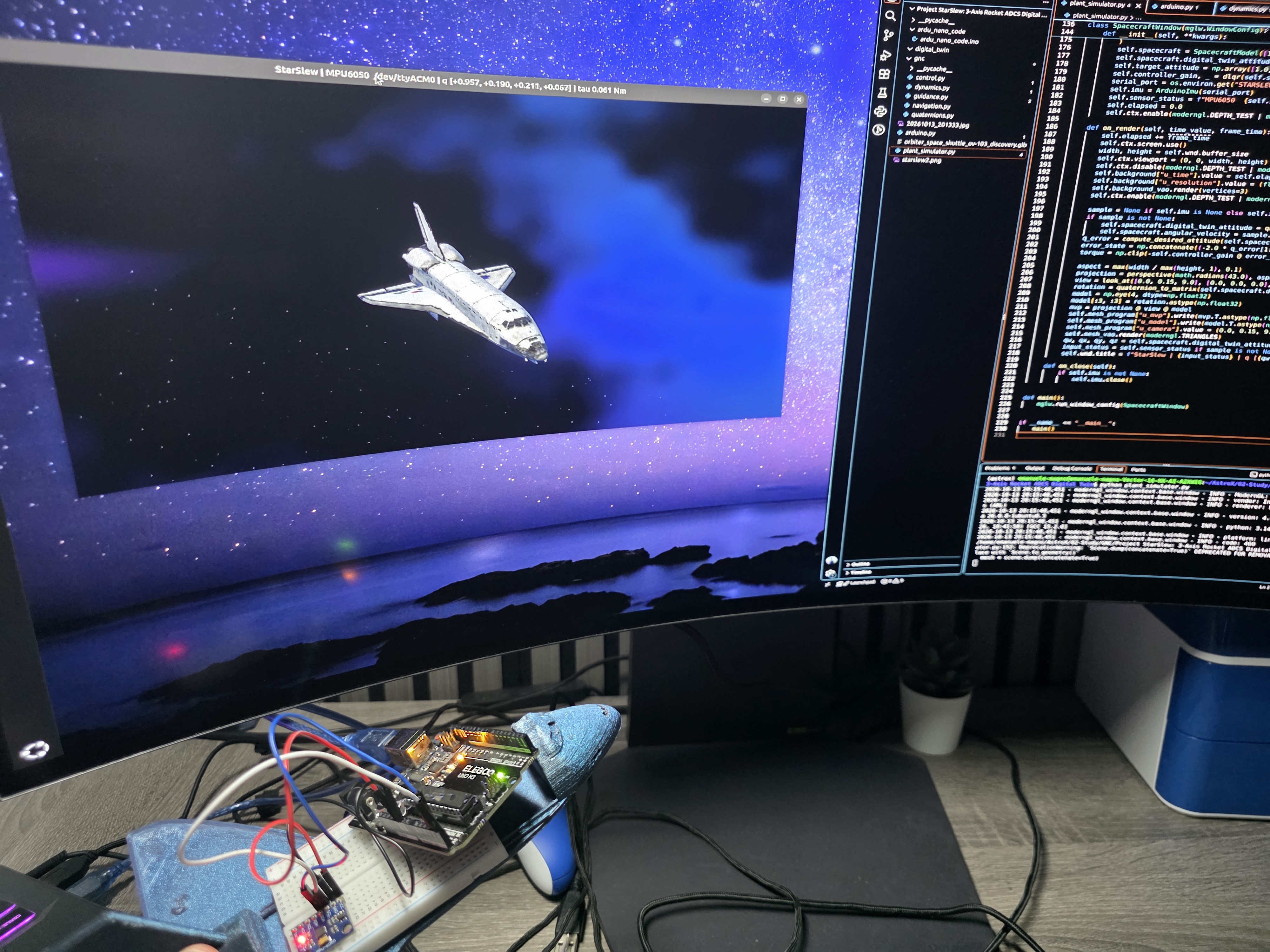
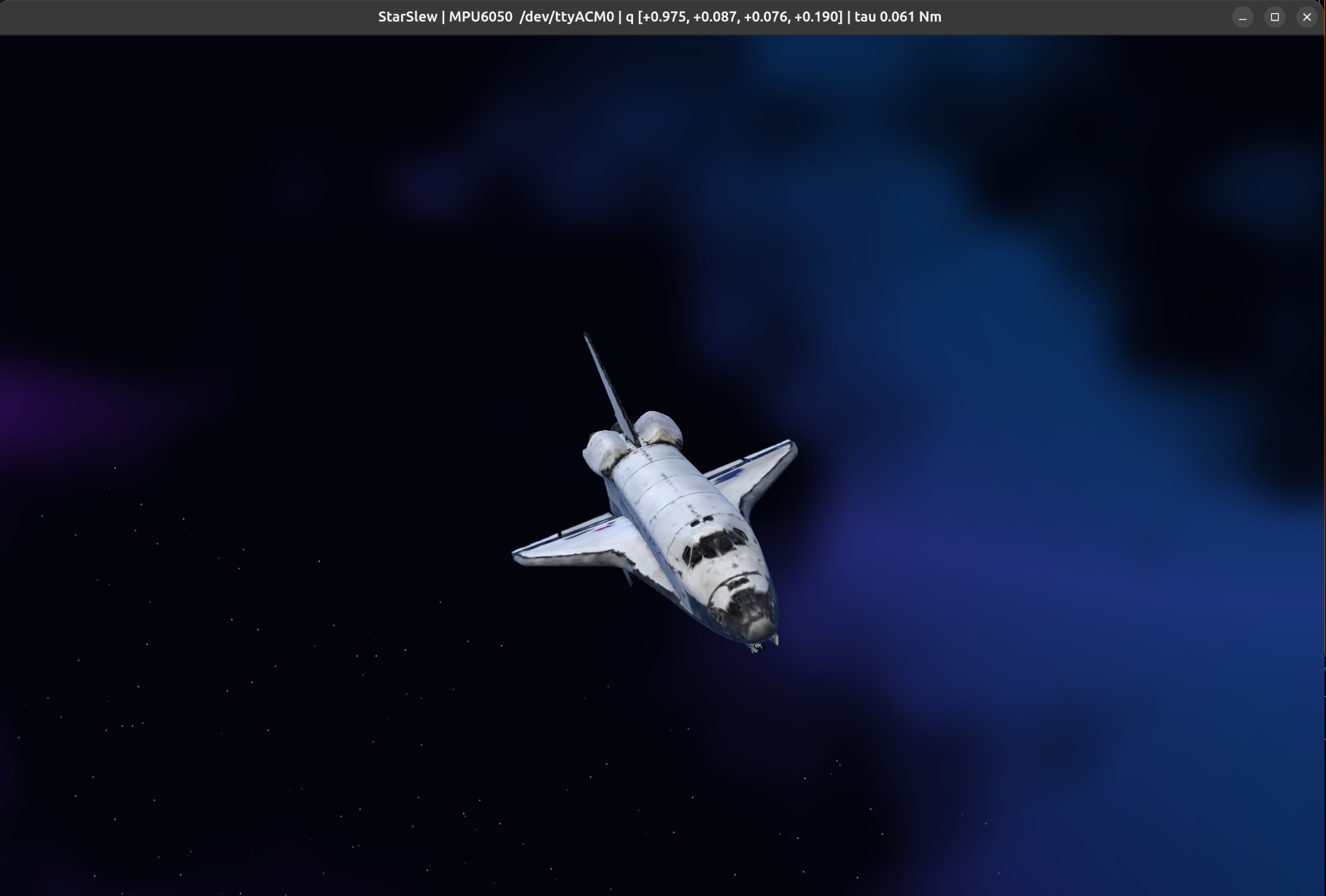
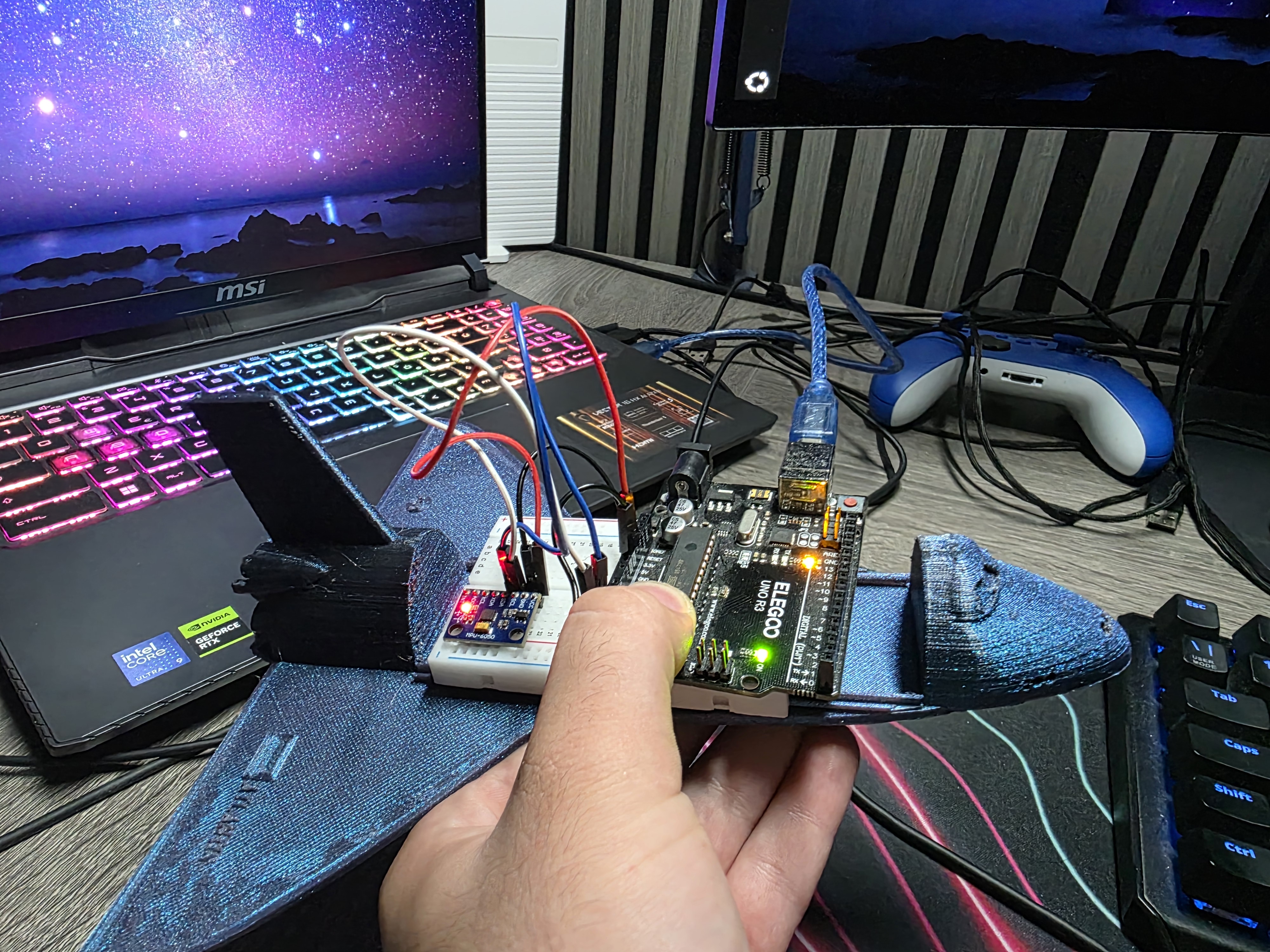
StarSlew is a 3-axis attitude-control digital twin that connects an Arduino Nano and MPU6050 to a quaternion-based GNC software stack and a 3D spacecraft visualization.
Rotate this page on a phone to drive a live attitude model. Switch off fusion and watch a small gyro bias accumulate; switch it back on to compare the corrected estimate.
Runs on this device. Sensor readings stay in your browser. Educational complementary-filter demo; it does not claim to run StarSlew's project estimator.
Sensor permission has not been requested.
Estimated yaw
0.0°
Yaw error
0.0°
Input
Waiting
ATTITUDE ESTIMATE · QUATERNION VIEW
Challenge
Estimate and visualize spacecraft attitude from low-cost inertial sensors while accounting for sensor drift, limited observability, and simplified vehicle dynamics.
Approach
Convert raw accelerometer and gyroscope readings to SI units, fuse them into an attitude quaternion, compute quaternion guidance error, and evaluate a discrete LQR controller with a rigid-body dynamics model.
Outcome
In a software-only simulation, attitude error decreased from 38.27° to below 1° in 1.32 s. These results are not hardware measurements; yaw drift and an LQR state-scaling discrepancy remain limitations.
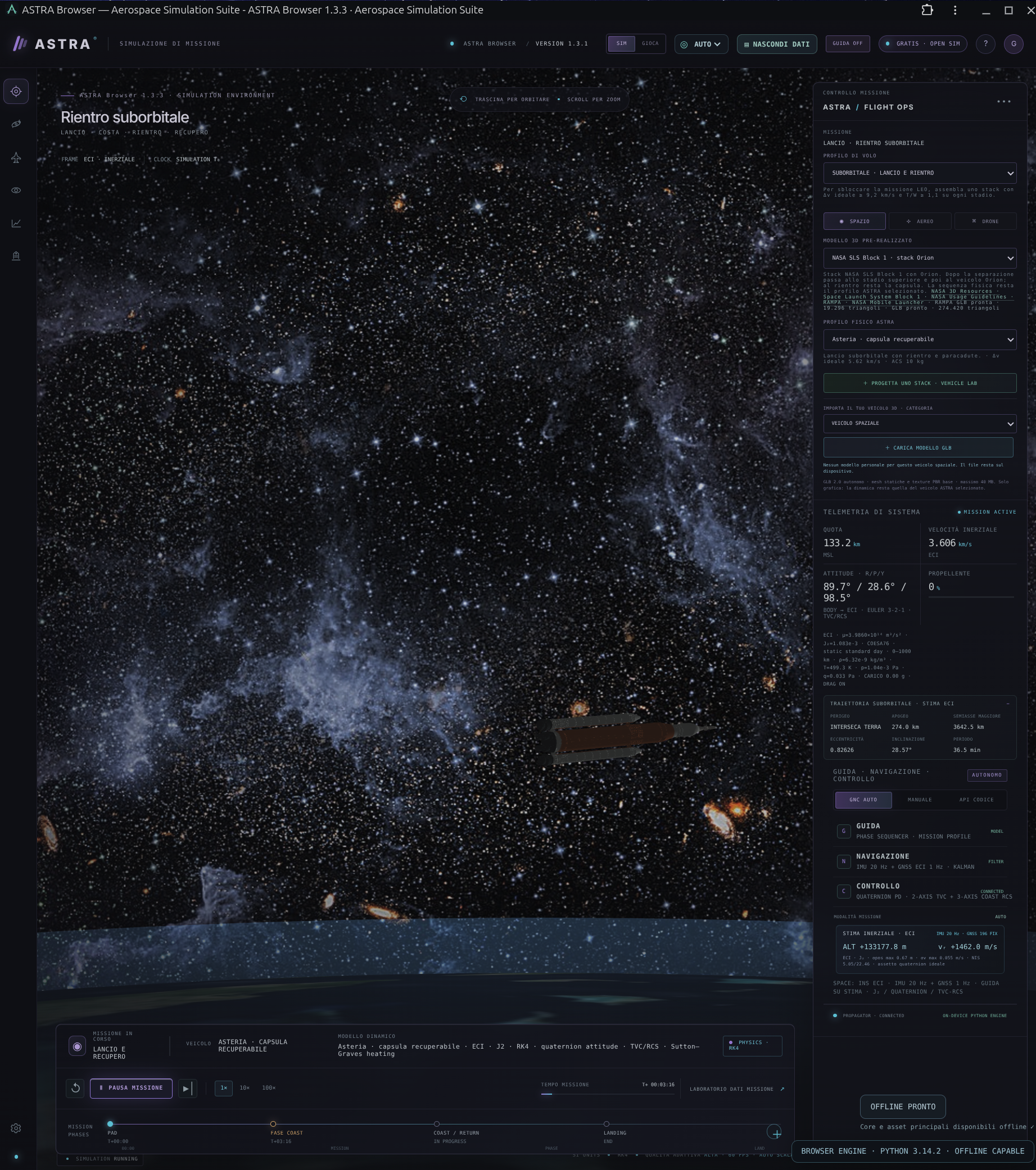
A high-fidelity aerospace simulation environment designed to visualize orbital mechanics, spacecraft dynamics, and mission operations in real time. The simulator serves as both an engineering tool and an educational pla…
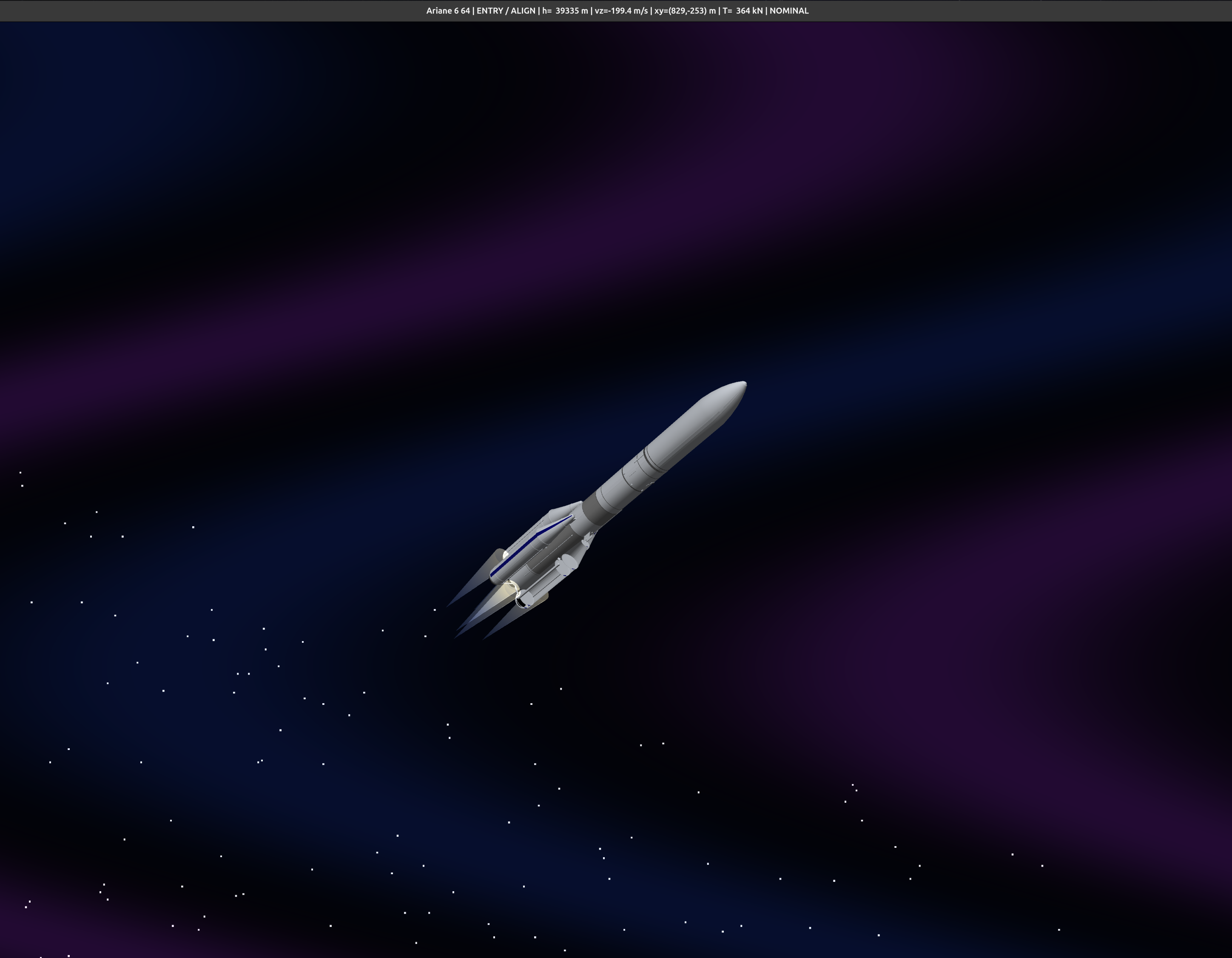
TECHNICAL PROJECT / Robust 6-DOF Guidance, Navigation and Control for Autonomous Powered Descent Under Wind, Navigation Uncertainty and Partial Actuator Degradation
The objective is to recover a six-degree-of-freedom vehicle from an initially descending, laterally displaced and
deliberately tilted state, reject atmospheric wind and sensor uncertainty, command thrust and two-axis t…
TECHNICAL PROJECT / Dual Quaternion GNC for Spacecraft Proximity Operations
A six-degree-of-freedom Guidance, Navigation and Control framework using dual quaternions to simultaneously represent spacecraft translation and rotation during autonomous proximity operations.